Build a frame. Reconfigure it into a mechanism. Grow it into a larger shared project. Lux Blox gives students and teachers the freedom to explore practical engineering—with first principles, reconnectable parts, and support that leaves room to invent.
3 modules + 1 capstoneStructures, mechanical advantage, gears, and a working drawbridge.
24 students · 8 teamsPhysical construction materials and motor power for capstone investigations.
Teacher support includedLesson resources, demonstrations, live onboarding, and a scheduled check-in.
Enhanced digital BuilderConnect digital planning with physical construction and testing.
The freedom is in the connections.
A starting build. A world of possibilities.
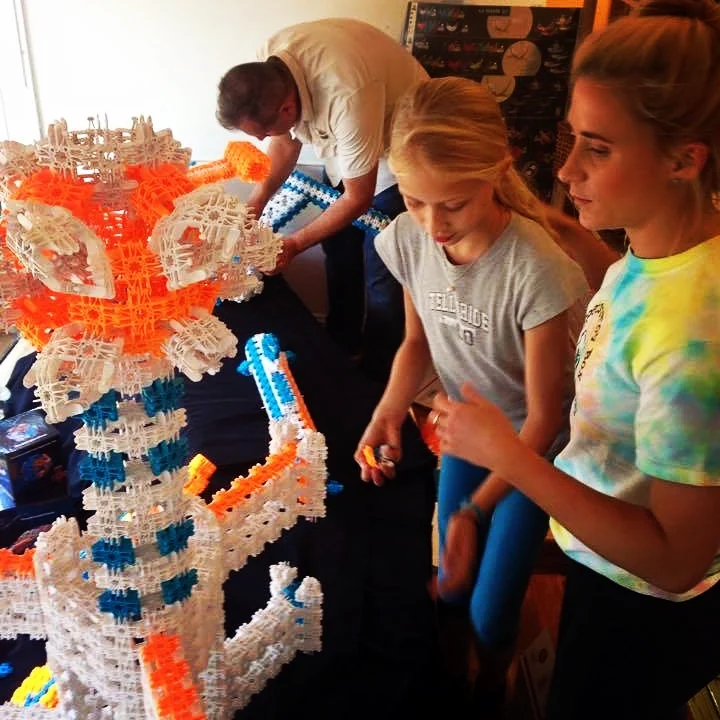
The same construction system supports frames, moving linkages, and geared machines. Guided lessons establish the principles; students and teachers choose how far to take the investigation.
Students use Lux Blox to give ideas a physical form, investigate a practical task, and explain their thinking. These projects show the construction system in use.
Class 9A · Bilingual Montessori School of Lund, Sweden · 2022
A student idea. An award-winning presentation.
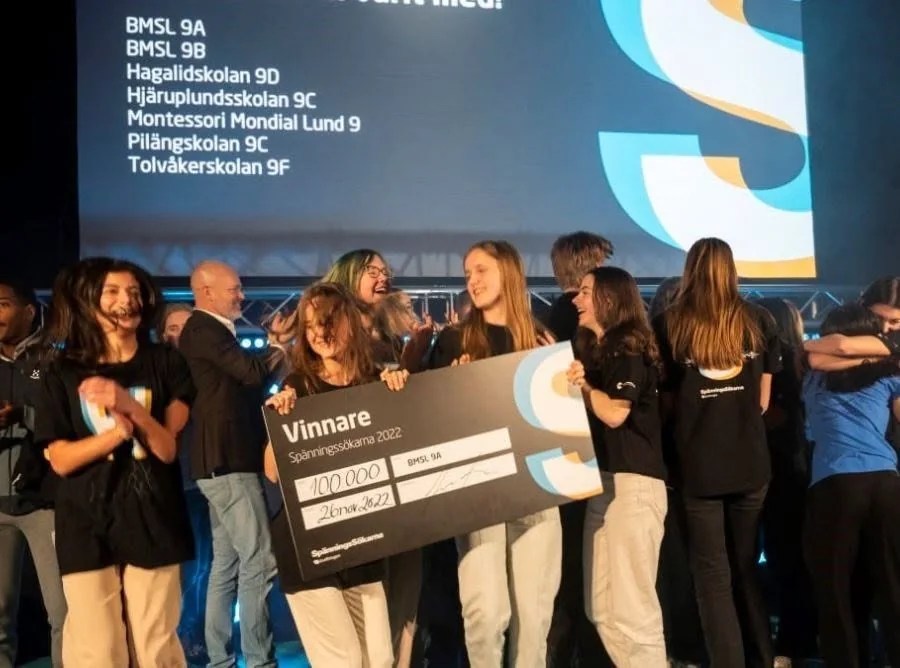
F.R.E.S.H. takes first prize.
Class 9A won Spänningssökarna 2022 with F.R.E.S.H., a proposed energy-storage concept represented with Lux Blox models. Kraftringen’s competition report confirms the SEK 100,000 first prize, seven finalists, and 44 participating classes.
Lund students put their Lux Blox bridge to the test with Blue-Bots. Original classroom film · 21 seconds.
A practical task. A shared investigation.
A bridge with a job to do.
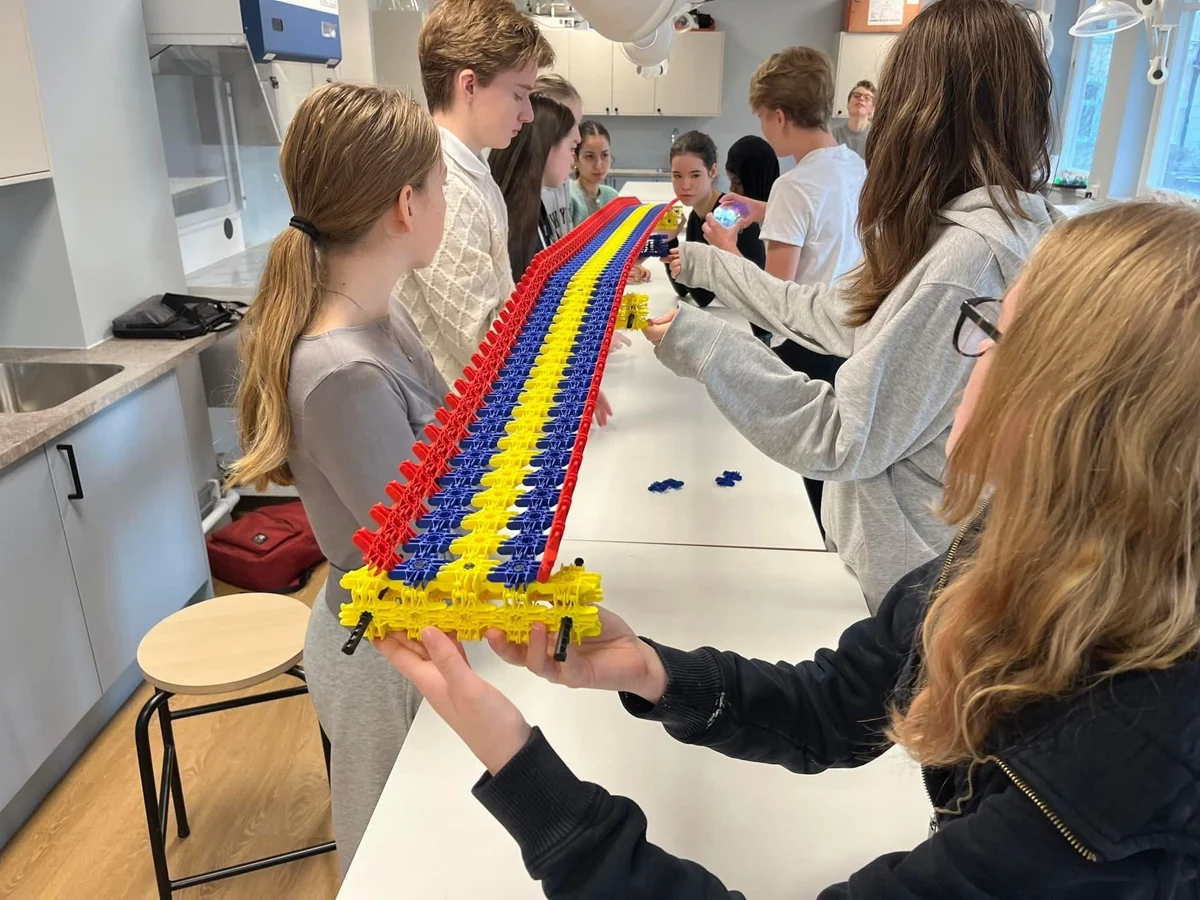
Students at the same school collaborate on a suspension bridge and try to get Blue-Bots across it. A shared build becomes a problem students can observe, discuss, and work through together.
Lux Blox’s collaboration with Bradley University includes ongoing classroom research with a CTE teacher at a local middle school. This is work in progress; completed classroom findings and measured learning gains are not reported here.
The Lund projects demonstrate existing classroom use. The Spring 2027 Launch Lab brings a new teaching sequence; findings from the current research will be shared when available.
Beyond the tabletop · Begin with Structural Intelligence
Start with a frame. Change the brief.
Change the folds, bracing, repeated units, or span. Compare what happens, then use what you learn in a larger shared build.
The same principles carry into the drawbridge: a useful frame must support a moving mechanism. Teachers can change the task while retaining clear learning goals—and students can develop different working solutions.